
Florida Nail Care · 6 min read
How to Make a Pedicure Last Longer in Florida Humidity
Sandal season here runs twelve months. Seven habits that keep a pedicure looking good on the Gulf Coast, where most advice written for other climates falls apart.
Published · By the team at L.A Nails
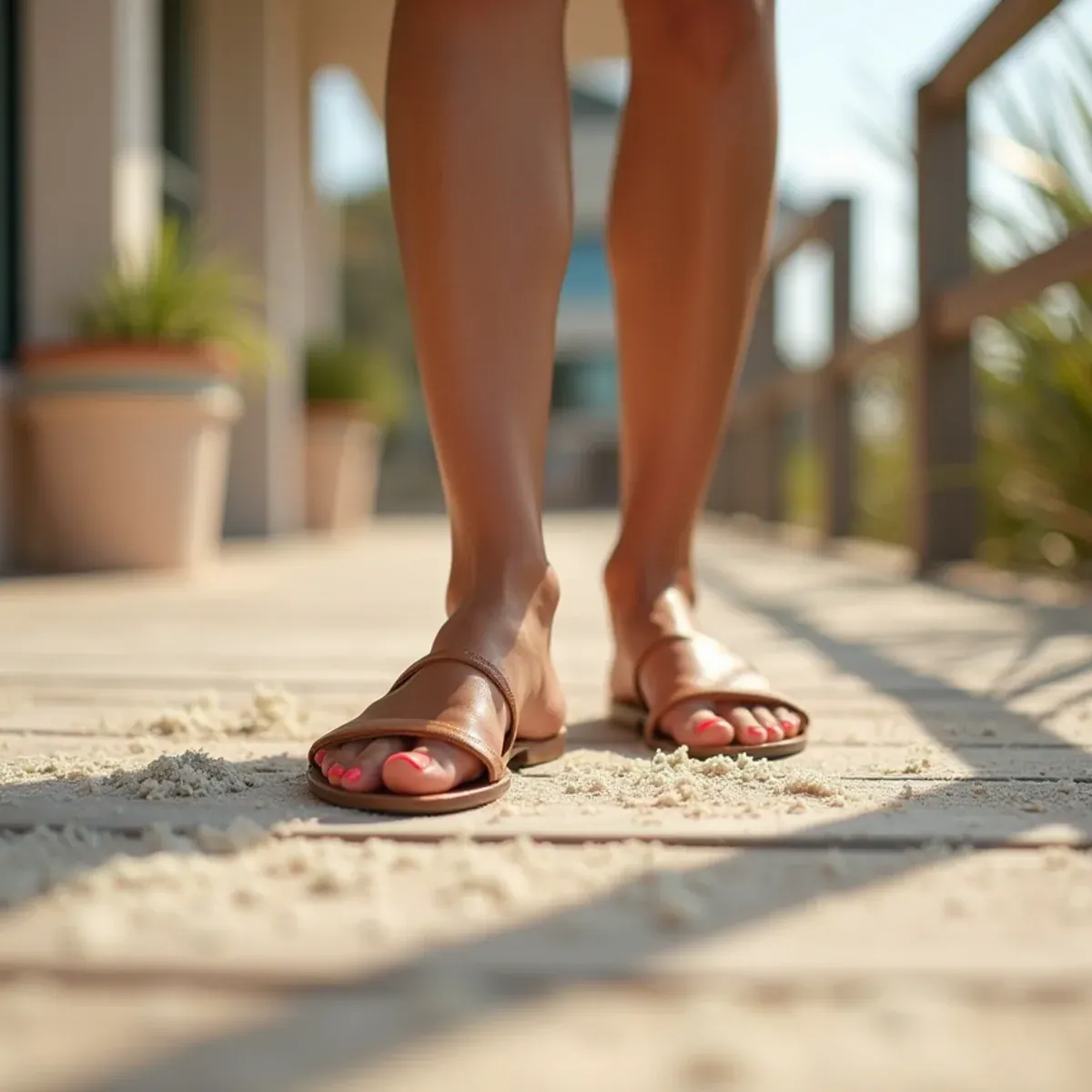
To make a pedicure last in Florida, choose gel polish over regular lacquer, rinse in fresh water after every swim, moisturise the heel and ball of the foot nightly, wear closed shoes for the first few hours after your appointment, and book on a four-to-six-week cycle rather than waiting for callus to rebuild. Gel on toes typically holds four to six weeks here; lacquer holds one to two.
Why Florida is harder on a pedicure
Most pedicure advice is written for a climate where feet spend eight months of the year in closed shoes. On the Gulf Coast the opposite is true. Feet are in open sandals nearly all year, which means constant exposure to sun, air, sand and friction at the heel. Add pool chlorine, salt water and 70-plus percent humidity and you have an environment that works against every part of a pedicure at once.
The practical consequences are specific. Heel callus rebuilds faster because open-back sandals allow the fat pad to spread and the skin to dry. Toe polish fades and dulls faster because of UV exposure. And the wet-dry cycling of swimming causes the nail plate to swell and contract repeatedly, which loosens polish at the edges.
Seven habits that actually work here
None of these are complicated and none of them require buying much. They are simply the ones that matter in this climate rather than a generic list.
1. Choose gel over lacquer on toes
Gel polish on toenails commonly holds four to six weeks against one to two for regular lacquer, and it does not soften in water or dull in the sun. On a per-week basis it is the cheaper option for anyone who swims or wears open shoes regularly.
2. Rinse in fresh water after every swim
Salt draws moisture out of skin and nails, and chlorine is drying and mildly bleaching. Rinsing within a few minutes, before either dries on the skin, prevents most of the damage. This is the highest-return free habit on the list.
3. Moisturise the heel every night
A thick urea-based foot cream applied at night, ideally with socks over it, does more for callus than anything you can do during the day. Ten minutes of effort a week makes your next appointment shorter and more comfortable.
4. Wear closed shoes for a few hours afterwards
Counter-intuitive but true for regular lacquer. Sandal straps and flip-flop thongs press against soft polish and leave marks for hours after you leave. If you can wear closed shoes home, or choose gel and skip the issue entirely, you avoid it.
5. Keep to a four-to-six-week cycle
Not six to eight, which is what most guides say. Sand abrasion and year-round open footwear mean callus rebuilds faster here. Staying on a tighter cycle keeps each appointment shorter and cheaper than letting three months of build-up accumulate.
6. Shake sand out of your sandals
Sand trapped against the heel is continuous fine abrasion, and it is the single biggest reason heel callus builds faster on the coast than inland. It sounds trivial and it genuinely is not.
7. Apply cuticle oil to toenails too
Almost nobody does this and it works exactly as well on toes as on fingers. A flexible nail plate holds polish longer and splits less. It takes fifteen seconds at night.
Timing around holidays and beach weeks
If you are visiting Anna Maria Island or taking a beach week, book the pedicure at the start of the trip, not the end. Callus reduction done on day one keeps working through the week; done on day six it is spent on a result you will not be around to enjoy. Choose gel so it survives sand and salt water for the duration.
Before a cruise or a flight out of Tampa or Sarasota Bradenton, the same logic applies with an added factor: gel is fully hard when the service ends, so there is no drying time and nothing to smudge while you are handling luggage. Regular lacquer stays vulnerable for hours.
When callus is more than a cosmetic problem
Cracked heels that bleed, or callus that has become painful to walk on, are past the point where a pedicure alone is the answer. See a doctor first — deep cracks can become infected, and in Florida’s humidity that happens faster than people expect.
The same applies to anyone with diabetes, neuropathy or circulation problems. Talk to your doctor about salon pedicures before booking, and tell your technician what you were told. A good salon will work within those instructions, keep water temperature moderate and skip callus reduction entirely if advised. That conversation is completely routine and should never feel awkward.
Want this done properly in Bradenton?
L.A Nails is at 4525 14th St W in Cortez Plaza, South Bradenton. Walk in Monday through Saturday, 9:00 AM to 7:00 PM, or call (941) 752-7026 and we will book the right amount of time for what you want.
Questions
Pedicure questions from Gulf Coast clients
How long should a pedicure last in Florida?
Gel polish on toenails typically holds four to six weeks; regular lacquer holds one to two. The callus and skin work is what sets the appointment cycle, and in this climate that means booking every four to six weeks rather than the six to eight quoted elsewhere.
Does chlorine ruin a pedicure?
Chlorine is drying and mildly bleaching, which dulls regular lacquer and dries the skin around the nail. Gel polish is unaffected chemically. Rinsing in fresh water within a few minutes of leaving the pool prevents most of the damage either way.
Why does my heel callus come back so fast?
Open-back sandals let the fat pad spread and the skin dry, and sand trapped inside them acts as continuous abrasion. Both are constants in coastal Florida. Nightly moisturising and a four-to-six-week pedicure cycle keep it manageable.
Should I get a pedicure before or after a beach holiday?
Before. Callus reduction and exfoliation done at the start of the trip keep working all week, and gel polish will survive the sand and salt water. Booking at the end means paying for a result you will not be around to enjoy.
Pedicures and related services
Services in this guide
- Pedicures in Bradenton, FLSandal season here runs twelve months. Your feet deserve a service built for that, not a five-minute polish change.
- Nail Polish & Colour Change in Bradenton, FLFifteen to twenty minutes, in and out. The service for when the shape is fine and only the colour is wrong.
- Manicures in Bradenton, FLCuticle work done properly, shaping that suits your hands, and a finish that survives a Florida week.
Getting to the salon
Related guides
- Salt Water, Sand and Chlorine: Protecting Your Nails on the Gulf CoastWhat the Gulf, the pool and the beach actually do to a nail plate — and the small number of habits that offset all three.
- How to Tell If a Nail Salon Is Actually Clean: A 12-Point ChecklistEvery salon says it sterilises. Here is what to look for so you can judge for yourself — at any salon, including ours.
Every guide we have written
- how salt water and chlorine affect your nails
- men's manicure what to expect
- nail care for snowbirds in Florida
- wedding nail timeline
- how to fix a broken nail
- nail shapes guide
- gel manicure aftercare
- how often should you get a fill
- Gel-X vs hard gel nail extensions
- how to tell if a nail salon is clean
- how long do dip powder nails last
- how much does a full set of nails cost
- what to expect at your first manicure
- gel vs acrylic nails