
Florida Nail Care · 7 min read
Salt Water, Sand and Chlorine: Protecting Your Nails on the Gulf Coast
What the Gulf, the pool and the beach actually do to a nail plate — and the small number of habits that offset all three.
Published · By the team at L.A Nails
Salt water draws moisture out of the nail plate and surrounding skin, chlorine is drying and mildly bleaching, and sand acts as continuous fine abrasion on the free edge and heels. All three are offset by the same habits: rinse in fresh water immediately after exposure, use cuticle oil daily, and choose gel or dip powder over regular lacquer if you are in the water more than twice a week.
What salt water does
Salt is hygroscopic — it pulls water toward itself. When salt water dries on your skin and nails, the salt left behind continues drawing moisture out of the tissue underneath it. That is why hands feel tight and chalky an hour after a swim in the Gulf rather than immediately.
For the nail plate specifically, the effect is dehydration and loss of flexibility. A dehydrated plate is brittle, and a brittle plate splits at the free edge and cracks under polish rather than flexing with the finger. This is the mechanism behind the classic coastal complaint of nails that peel in visible layers.
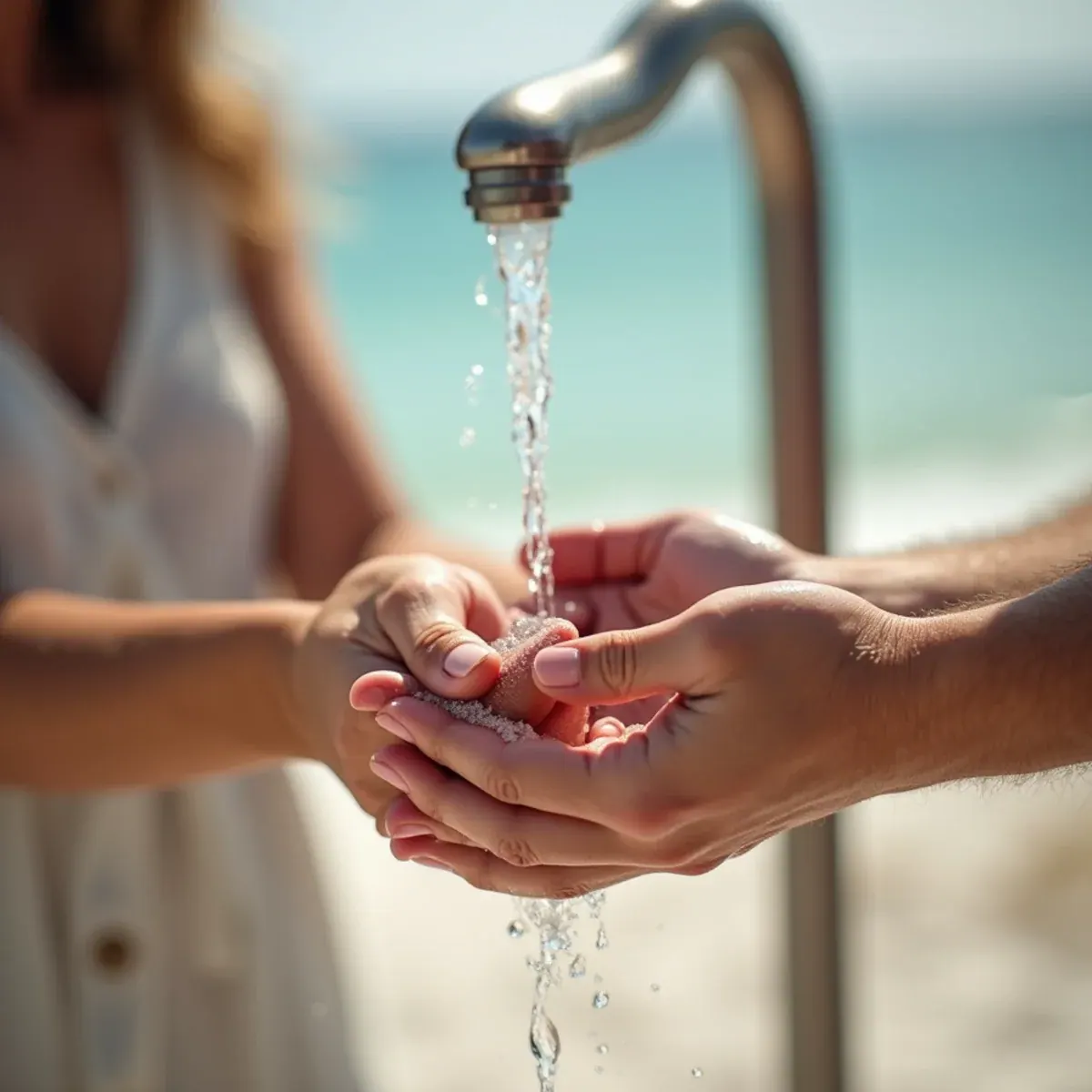
The fix is embarrassingly simple: rinse before it dries. A freshwater rinse within a few minutes of coming out of the water removes the salt before it has time to do anything. Beach showers, a hose at the dock, a water bottle over your hands — all of it works.
What chlorine does
Chlorinated pool water is drying and mildly bleaching. On regular lacquer it dulls the finish and can shift lighter colours over repeated exposure. On the natural nail it strips oils and can leave the plate looking slightly chalky. Neither effect is dramatic from one swim, and both accumulate over a season of daily pool use.
Cured gel and dip powder are chemically resistant and are not affected in the same way. If you swim most days, that difference is decisive — the money spent on gel is recovered in not repeatedly redoing lacquer that was never going to survive.
Two smaller points worth knowing. Chlorine dries the skin around the nail as much as the nail itself, so cuticles suffer more than the plate does. And hot tubs are worse than pools because heat accelerates everything.
What sand does
Sand is the one people never think about, and mechanically it is the most aggressive of the three. It is fine abrasive material, and when it gets into sandals or between fingers it works continuously against skin and nail surfaces every time you move.
On feet, this is why heel callus builds faster on the coast than inland. Sand trapped between the heel and a sandal footbed is effectively sandpaper running all day. Shaking out your sandals genuinely helps and takes two seconds.
On hands, sand abrades the free edge and the surface of polish. It also gets under the free edge, which is uncomfortable and encourages people to pick at their nails. Rinsing hands properly after a beach day — including under the tips — deals with it.
The habits that offset all three
The same short list handles salt, chlorine and sand, which is convenient.
Rinse immediately
Fresh water within a few minutes of leaving the Gulf or the pool, before anything dries. This single habit addresses most of the damage from both salt and chlorine and costs nothing.
Cuticle oil daily
Rehydrates the nail plate and keeps it flexible. A flexible plate resists splitting and holds polish longer. Apply at night so it has hours to absorb rather than being washed off.
Choose a cured product if you swim often
Gel polish or dip powder for anyone in the water more than twice a week. Both are chemically resistant and do not soften on contact with water. Regular lacquer is a poor investment in that context.
Shake out your sandals
Two seconds, and it removes the abrasive that is building your heel callus. The most disproportionately effective item on this list.
Moisturise hands and feet at night
A proper cream rather than a thin lotion, particularly on the heel and around the cuticles. In Florida’s humidity people assume their skin is hydrated; the sun, salt and air conditioning say otherwise.
For boaters and anglers specifically
Time on the water in Manatee County brings a combination the average beachgoer does not face: sustained salt spray, sun exposure, rope and line handling, and often fish-handling and bait. That combination is genuinely hard on hands, and gel or dip is the only thing that reliably survives it.
Keep nails shorter than you might otherwise. Length is a liability around lines, cleats and hatches, and a nail that catches under load can tear into the nail bed rather than simply breaking. A squoval or round shape at short to medium length is the practical choice, and it looks entirely intentional.
Want this done properly in Bradenton?
L.A Nails is at 4525 14th St W in Cortez Plaza, South Bradenton. Walk in Monday through Saturday, 9:00 AM to 7:00 PM, or call (941) 752-7026 and we will book the right amount of time for what you want.
Questions
Beach and boat nail questions
Does salt water ruin gel nails?
No. Cured gel is chemically resistant and does not soften in salt water. What salt does affect is the natural nail and skin around the product — it draws moisture out, which is why rinsing in fresh water and using cuticle oil still matters.
Is chlorine or salt water worse for your nails?
Salt water is more dehydrating to the nail plate; chlorine is more drying to the surrounding skin and can dull regular lacquer over repeated exposure. Both are largely offset by rinsing in fresh water promptly and moisturising afterwards.
What nail service is best if I swim every day?
Gel polish or dip powder. Both are cured products that do not soften in water and are not affected by chlorine. Regular lacquer typically fails within days of daily swimming regardless of brand or top coat.
Why do my nails peel after a beach weekend?
Salt draws moisture out of the nail plate, and a dehydrated plate becomes brittle and separates in layers at the free edge. Sand abrasion at the tips accelerates it. Rinsing promptly and applying cuticle oil for a few days afterwards helps it recover.
Services that hold up on the water
Services in this guide
- Gel Nails in Bradenton, FLCured hard under lamp, capped at the edge, and removed by soak-off — never scraped or peeled off your natural nail.
- Pedicures in Bradenton, FLSandal season here runs twelve months. Your feet deserve a service built for that, not a five-minute polish change.
- Dip Powder Nails in Bradenton, FLColour and strength in one system, applied from a sanitary poured tray rather than a shared jar.
Getting to the salon
Related guides
- How to Make a Pedicure Last Longer in Florida HumiditySandal season here runs twelve months. Seven habits that keep a pedicure looking good on the Gulf Coast, where most advice written for other climates falls apart.
- Gel Manicure Aftercare: 9 Habits That Add a WeekGel should give you two to three weeks. If you are getting eight days, the problem is almost always one of these nine things.
Every guide we have written
- men's manicure what to expect
- nail care for snowbirds in Florida
- wedding nail timeline
- how to fix a broken nail
- how to make a pedicure last longer
- nail shapes guide
- gel manicure aftercare
- how often should you get a fill
- Gel-X vs hard gel nail extensions
- how to tell if a nail salon is clean
- how long do dip powder nails last
- how much does a full set of nails cost
- what to expect at your first manicure
- gel vs acrylic nails